GUIDE
How ultrasonic cleaning works
Cavitation, frequency selection and the multi-stage process — a plain-English guide to how ultrasonic cleaning gets parts clean, and how to choose the right system.
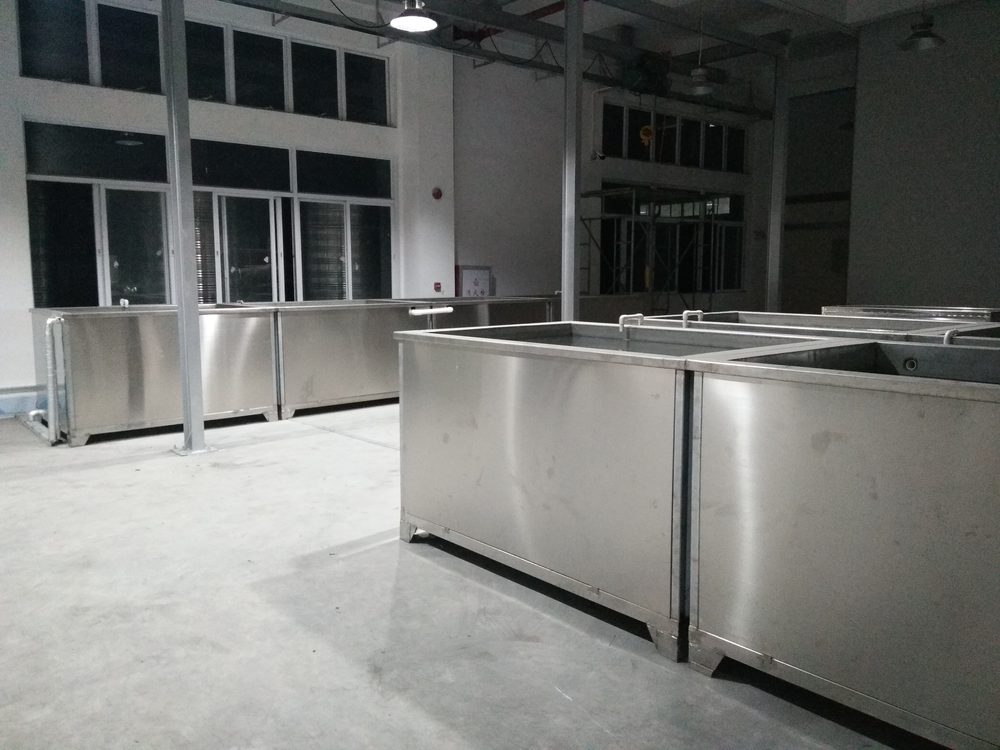
Cavitation, frequency selection and the multi-stage process — a plain-English guide to how ultrasonic cleaning gets parts clean, and how to choose the right system.
Ultrasonic transducers send high-frequency pressure waves through the cleaning fluid, creating millions of microscopic bubbles. As they implode — cavitation — they release intense, highly localised energy that lifts oil, grease, carbon and fine particles off every wetted surface, including blind holes, threads and complex geometry that manual or spray cleaning can't reach.
Because the fluid carries the energy everywhere it touches, ultrasonic cleaning is uniform, repeatable and gentle — no abrasion, no disassembly.
| 1. Load | Parts placed in baskets or on the conveyor. |
| 2. Pre-soak / dewax | Soften heavy soils before ultrasonics. |
| 3. Ultrasonic wash | Cavitation lifts contaminants off every surface. |
| 4. Rinse | Remove loosened soils and chemistry. |
| 5. Passivation (optional) | Protect the cleaned surface. |
| 6. Dry & unload | Hot-air or vacuum drying. |
Stages, automation, filtration and chemistry are configured to your parts and throughput.
Cavitation is the rapid formation and implosion of microscopic bubbles in the cleaning fluid. Each implosion releases a tiny, intense burst of energy that scrubs the part surface at a microscopic level.
Lower frequencies (25–28 kHz) for heavy soils and robust parts; mid (33–40 kHz) for general cleaning; higher (68–132 kHz) for delicate or precision surfaces. We match it to your parts and soils.
Start from your parts, soils, cleanliness target, throughput and floor space. From there we recommend single-tank, multi-tank or automated, with the right frequency, power density, stages and chemistry.
Tell us your parts, soils, throughput and budget — we'll reply with a tailored solution.